Luxury Presence vs AgentFire vs custom web design: why agents are moving to Clozma in 2026
Subscription platforms got agents online fast. They also put five hundred agents in the same market on the same layout. Here is how the three models actually differ, and when custom is worth it.

Every real estate website platform sells the same promise: a beautiful site, live quickly, without touching code. For a first site that promise is worth paying for. The trouble shows up two or three years in, when you are a top producer in your market and your website still looks like the other agents who bought the same plan.
This is a comparison of three models rather than three feature lists. Feature lists change every quarter. The underlying model is what decides whether your site can still represent you in year four.
The three models, side by side
| Luxury Presence | AgentFire | Clozma | |
|---|---|---|---|
| Core model | Subscription design platform | Subscription site builder plus add-on tools | Custom design and build studio |
| Design starting point | Designer template library, then customized | Template plus drag-and-drop page blocks | Blank page, designed around your brand |
| Who it fits | Luxury agents who want a proven look quickly | Agents who want a large tool stack in one place | Agents whose brand is the differentiator |
| What you own | Access while you subscribe | Access while you subscribe | The site itself, yours to keep |
| Typical time to launch | Weeks | Weeks | 7 days from kickoff |
Where template platforms genuinely win
It is worth being fair here, because the honest answer changes depending on where you are in your career. If you are in your first two years, a subscription platform is usually the right call. You get a competent site for a predictable monthly fee, the IDX is already wired, and you can spend your attention on prospecting instead of on design decisions you are not yet equipped to make.
Platforms are also the safer choice when nobody knows your name yet. A template that looks like every other agent site is not a liability when you have no brand to dilute. It is a floor, and a reasonable one.
Where the model starts costing you
The break comes when your reputation gets ahead of your website. Three specific things go wrong.
1. Your site stops being a differentiator
Template libraries are finite and popular templates get picked repeatedly inside the same metro. A seller comparing three listing presentations can end up looking at three sites with the same hero layout, the same section order, and the same stock lifestyle photography. At that point your website has stopped arguing for you. It has become a commodity that every competitor also has.
2. The layout fights your positioning
Templates encode assumptions. A layout built for a high-volume buyer agent leads with search. A luxury listing specialist needs to lead with the property, the story, and the proof. You can push a template a long way, but you are editing inside somebody else's structure, and the structure is what carries positioning.
3. You are renting the thing your business runs on
This is the one agents underrate until they try to leave. On a subscription platform your site exists while you pay. Cancel and you are not migrating a site, you are rebuilding one, usually under time pressure, usually losing the SEO history that took years to earn.
The question is not whether a platform can build you a good-looking site. It is whether you want the thing your reputation runs on to be something you rent.
What custom actually means
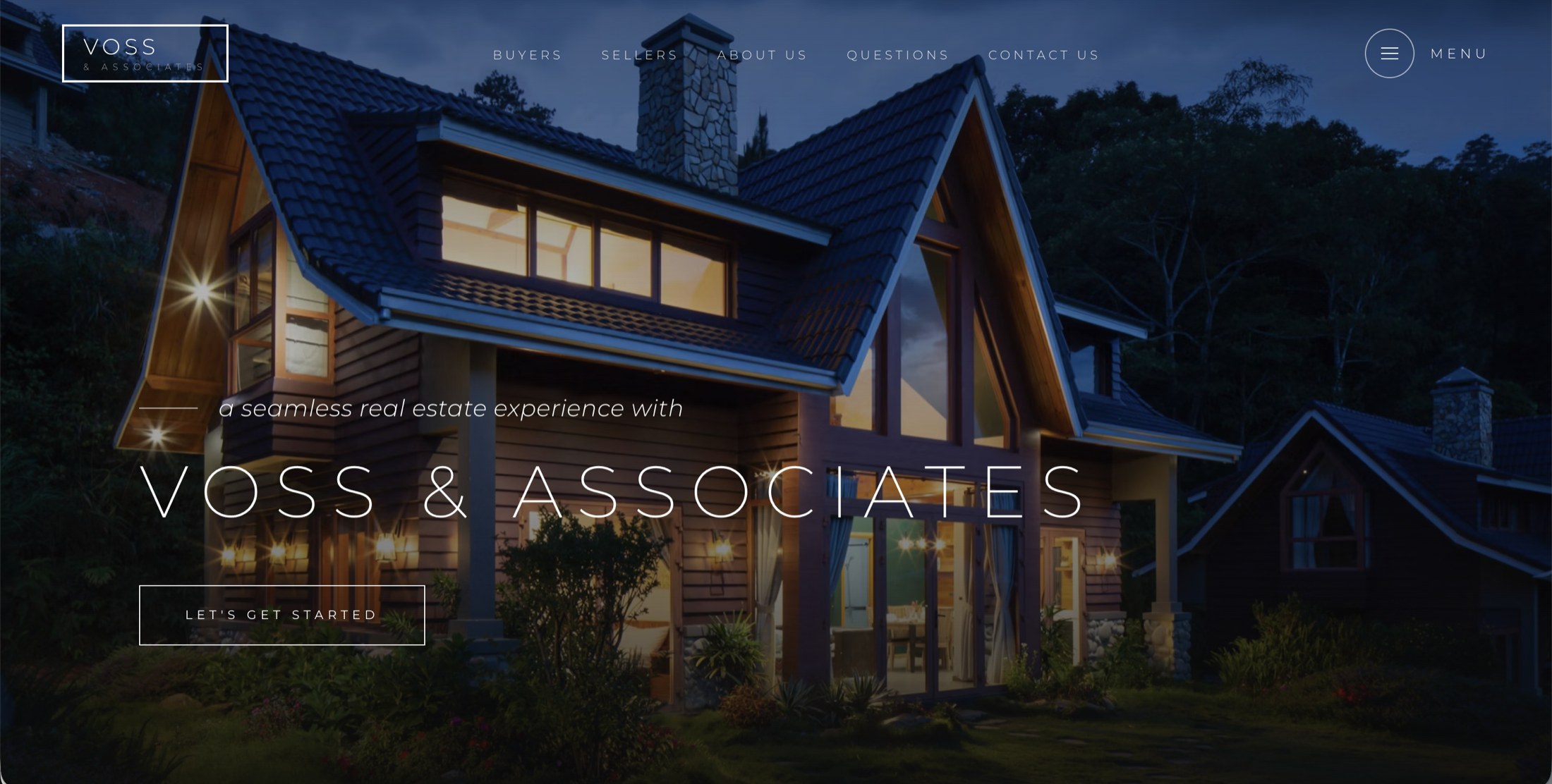
Custom is an overused word, so here is the concrete version. A custom build starts from your market, your niche, and the clients you are actually trying to win, and the layout is derived from that rather than selected from a menu.
- No themes, no page builders, and no stock layouts anywhere in the stack
- Typography, color, and photography direction chosen for your brand rather than inherited from a template
- Section order driven by how your buyers and sellers actually decide, not by a default homepage
- Live IDX search wired in without the page-speed penalty that bolt-on widgets usually bring
- The finished site is yours, on your domain, with your analytics and your search history intact
The cost question, answered plainly
Custom design carries a one-time build cost that a subscription does not. That is the real tradeoff and there is no point pretending otherwise. What changes the math is what happens after launch.
A subscription is a permanent line item that never converts into an asset. A one-time build plus a smaller monthly fee for hosting, maintenance, and lead follow-up ends with you owning something. Over a three to five year horizon, which is roughly how long a well-built site stays current, the two paths usually land closer than agents expect, and only one of them leaves you with equity.
Clozma prices the build on a short strategy call rather than publishing a single number, because the honest price depends on how many pages you need and how much brand work exists already. The monthly side is fixed and published.
How to decide
- 1
Stay on a platform if you are early, your brand is still forming, and predictable monthly cost matters more than differentiation right now.
- 2
Move to custom if you are winning listings on reputation, competing against agents who share your template, or losing luxury sellers before the first call.
- 3
Move to custom immediately if you are building a team or brokerage brand, because the brand needs to live somewhere you control.