Brokerage brand vs agent brand: why top producers build independent websites
A brokerage website is free, instant, and rented. What changes for a top producer on the day the domain, the design, and the search equity finally belong to them.


Taking the website your brokerage hands you is the right call for a new agent. It costs nothing past the tech fee, the MLS feed is already wired in, and it exists on your first day rather than your fortieth. Nobody should spend their first year in this business commissioning a custom site.
That call stops being right somewhere around the point you become a top producer, a team lead, or the recognized specialist for a school district or a relocation corridor. Not because the brokerage site got worse. Because what you are building changed. You stopped renting a place to send people, and started accumulating an asset that happens to sit on land you do not own.
What the free website actually costs
A brokerage site is a storefront inside someone else's mall. The rent is bundled into your fees, the foot traffic is real, and the lease ends the day you leave. That is a reasonable arrangement right up until the thing you are building inside it is worth more than the rent you are saving.
| Brokerage subdomain | Your own domain | |
|---|---|---|
| What happens when you move | The site, the URL, and the traffic stay behind | Everything moves with you, unchanged |
| The address itself | brokerage.com/agents/yourname | yourname.com |
| How it looks | The corporate template thousands of agents share | A design built around one brand, yours |
| Search equity | Compounds into the brokerage domain | Compounds into an asset on your balance sheet |
Three risks that only surface years in
1. Every link you earn builds someone else's domain
When your address is brokerage.com/agents/yourname, you are not building a website. You are building a page on a website. Every neighborhood guide you write, every client who links to you, every local publication that cites you, all of it deposits authority into a domain with your employer's name on the deed.
That is invisible while you stay. It becomes very visible the week you move. The rankings do not follow you, because they were never attached to you. You arrive at the new brokerage with your license, your database, and your reputation intact, and with your search presence reset to zero.
The work is yours either way. Under a brokerage subdomain, the compounding is not.
2. You look like every other agent flying the same flag
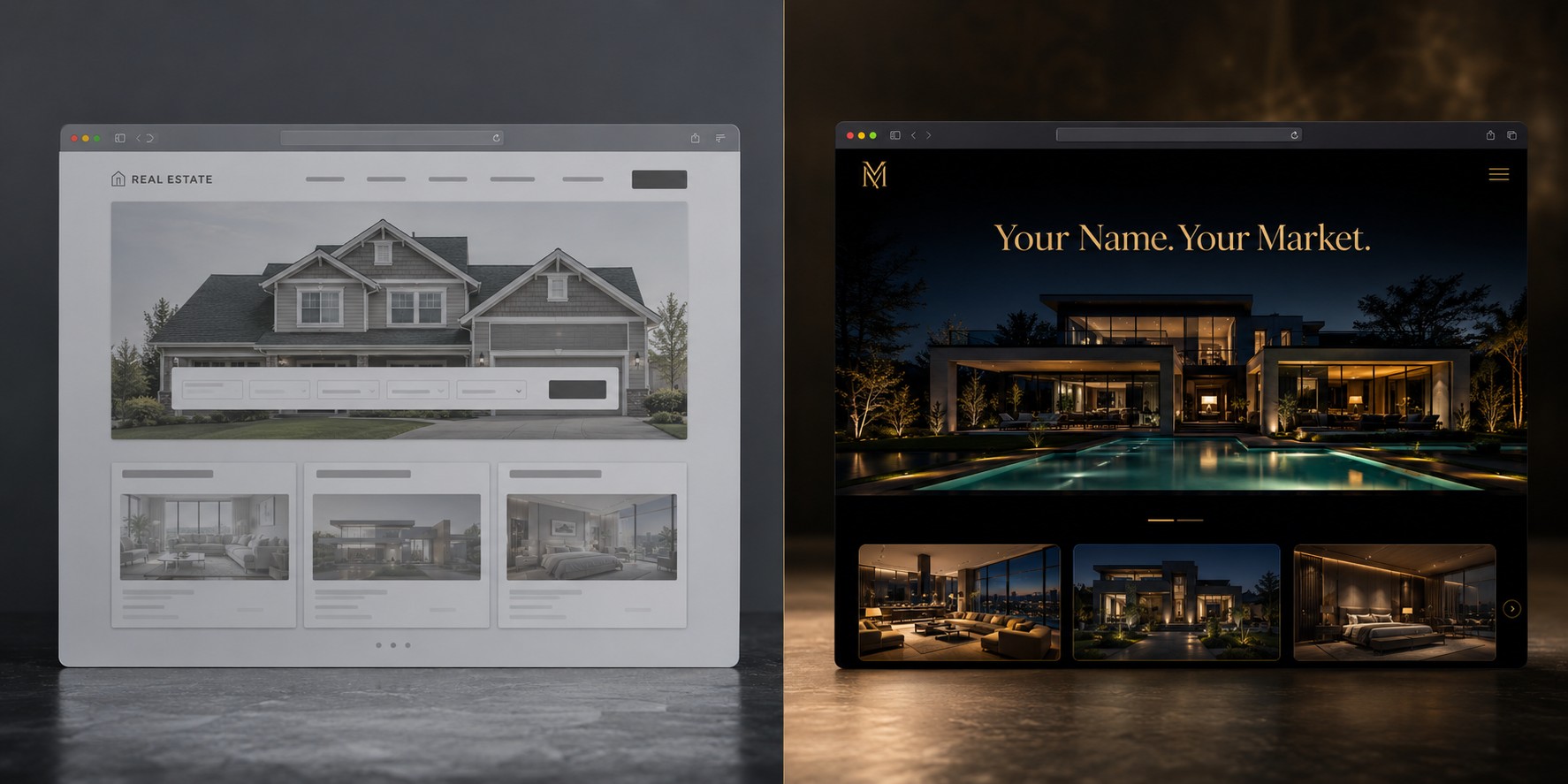
Brokerage templates are built to sell the brokerage first and the agent second, which is the correct priority for the company paying to build them. It is the wrong priority for you. The layout, the type, the photography treatment, and the color are all fixed at the corporate level, so the only variable left on the page is your headshot.
A seller comparing three agents in the same market often lands on three versions of the same page. At that point the design has stopped making an argument for anyone. It has become a wash, and the decision falls back to whoever was referred hardest.
3. The customization ceiling is fixed and low
The specific things that win a niche are usually the things a platform will not let you build. A relocation hub for buyers moving in from out of state. A builder incentive tracker for a new construction corridor. A Vastu orientation guide for a market where it decides offers. A luxury video header that runs full bleed without a sidebar. These are not exotic requests. They are simply outside what a template written for fifty thousand agents can accommodate.
The portable asset test
Here is the question worth sitting with. If you changed brokerages next quarter, what would you keep? Your database and your relationships, certainly. Your license. Your reputation in the market. And then the list stops, unless you own the domain.
100%
Of the search authority stays with the brokerage
0
Of it moves with you when you leave
1
Domain you actually hold the deed to
Top producers tend to make this switch at the same moment for the same reason. They start thinking about the business as something that could be sold, handed to a team, or run for another twenty years. A website you rent cannot appear anywhere in that plan. A domain you own can.
You can feature the brokerage and still own the brand
This is the objection we hear most, and it rests on a false choice. Building an independent site does not mean hiding who you hang your license with. Brokerage identity and required disclosures sit in the header and the footer, presented properly and compliantly, exactly as they would anywhere else.
What changes is the order. The brand a visitor meets first is yours, the domain collecting the search equity is yours, and the lead capture routes to your inbox rather than through a system you do not control. The brokerage is credited, clearly and correctly. It is just no longer the thing the site is selling.
What you are really deciding
The choice is not between a free website and an expensive one. It is between renting your digital presence and owning it, and the cost of renting does not show up as a line item. It shows up years later, as the equity you have to leave on the table because it was never in your name.
For a first year agent, renting is correct. For an agent who has become the reason clients call, it is worth asking how much longer you want to build on ground you do not hold.